
Running a Sex Offender Check in Carson County
The official public starting point is the Texas Public Sex Offender Registry. Texas DPS runs this free system for the public portion of the state registration program. A Carson County search can begin with a name, county, city, ZIP code, or address route. A name query works best when the first and middle names are also known. A location query is more useful for neighborhood awareness because it can focus on a place rather than a guessed spelling.
The registry and the Carson County Sheriff serve different roles. DPS publishes the state search and public profiles. The sheriff is the local law-enforcement authority for registration and verification in Carson County. Carson County does not publish a separate local registry list or map, so do not expect the sheriff’s sparse web page to duplicate the DPS database. Call the Carson County office when a search raises a local registration question. Use DPS when the goal is to view the current public record.
Carson County Sheriff Registry Role
The Carson County Sheriff’s Office is the verified local channel for a registration question. Its official mailing address is P.O. Box 972, Panhandle, Texas 79068, and its phone number is 806-537-3511. No registration hours, appointment rules, public fee, or named registration unit appear on the county page. Call first and ask for the registration officer, the required identification, and current appointment instructions. That direct check prevents a wasted trip and avoids assuming that the courthouse schedule applies to the sheriff.
Carson County Sheriff’s Office
P.O. Box 972
Panhandle, TX 79068
806-537-3511
Registration visits: call for the officer, hours, identification, and appointment process.
Contact the Carson County sheriff about suspected local noncompliance or an address concern. Give the facts that help staff identify the record, but do not use the call as a reason to approach a registrant. The Carson County office can decide what action or verification is proper under Texas law.
The official Texas registry information and terms screen shows the conditions placed before public access.
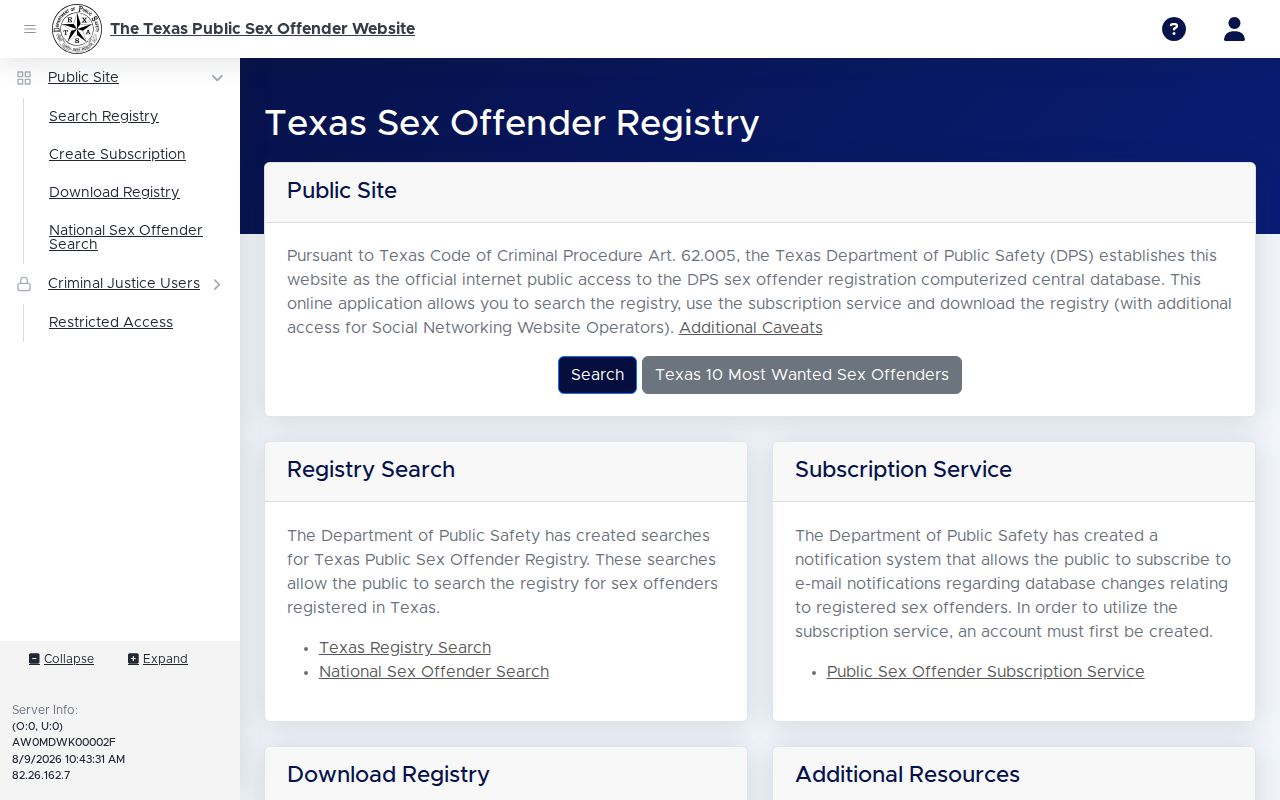
Those terms frame the registry as a public-safety record and reinforce that access comes with limits on misuse.
Searching the Texas Public Sex Offender Registry
DPS offers both person-based and location-based routes. Choose the route that matches the question before entering terms. A broad last-name query may return people from many parts of Texas. Selecting Carson in the county field narrows a location search to local registry records. City entries can focus on Panhandle, White Deer, Groom, or Skellytown, but a county search is less likely to omit a rural address outside an incorporated place.
- Open the DPS registry search. Read and accept the official conditions of use before moving to the search form.
- Use the name route when reliable identity details are known. Use the address, city, ZIP, or Carson County route for place-based awareness.
- Review the result list and compare more than the name. Check the photograph, aliases, physical description, address, and status shown by DPS.
- Open the full profile. Read the offense, conviction jurisdiction, registration authority, and compliance fields together before drawing a conclusion.
| Field Label | Type | Required | Notes |
|---|---|---|---|
| Last Name | Text | Route-dependent | Starts a name search. |
| First Name | Text | Optional | Narrows a name search. |
| Middle Name | Text | Optional | Helps separate similar names. |
| Address | Text | Location route | Enter a street or location as the live form directs. |
| City | Text or dropdown | Location route | Use a Carson County city when applicable. |
| County | Dropdown | Optional or location route | Select Carson for a county-wide query. |
| ZIP Code | Text | Optional or location route | Use a five-digit ZIP code. |
| Radius | Dropdown | Address route | Use only the distances offered by the live portal. |
The live interface may change. The official research did not preserve a reliable list of radius choices, so confirm that menu on the search screen instead of assuming a distance. Search and Clear controls run or reset the form, and results may appear in list or map form where offered.
Carson County Registry Search Scope
A Panhandle address search and a Carson County search answer different questions. The city route concentrates on the county seat and can be useful when the street is known. It does not stand for all 920.24 square miles of Carson County. White Deer, Groom, Skellytown, rural roads, and addresses outside a city boundary require a wider query. Run the county filter after a city search when the goal is broader community awareness.
Name spelling creates another limit in Carson County. Aliases, middle names, and changed names may affect a result set. Start with the most specific reliable details, then broaden the search if no plausible match appears. A location result also reflects what is public and current in the DPS system. It is not a count of all past Carson County offenses and does not replace a criminal court file.
Note: Registry entries describe statutory registration records, not every criminal case, arrest, or person under supervision in Carson County.
What a Registry Profile Shows
A public profile can combine identity, appearance, location, offense, and status details. Read the fields as one record. A shared name is not enough to identify a person, and the offense label alone may not explain the full court history. Visibility depends on Chapter 62, DPS rules, and the specific registration record. Some fields appear only when Texas law makes them public.
| Name and Aliases | The public identity and alternate names reported in the registration record. |
|---|---|
| Photo and Description | A primary photograph plus sex, race, age or birth information, physical traits, and scars, marks, or tattoos when displayed. |
| Address and Map | Public location information and a map presentation when the DPS profile offers one. |
| Offense and Statute | The offense description, legal citation, conviction date, and jurisdiction shown in the public record. |
| Registration Details | Registration or status identifiers, compliance status, and the registering agency. |
| Other Public Fields | Vehicle details and school or work fields where Chapter 62 and the public system permit display. |
Victim age or sex categories may appear where legally displayed. Treat those fields with care. The profile is not a full narrative of the underlying case, and it should not be recast as one. No individual registrant’s name, image, address, or profile data is reproduced here.
Correcting Carson County Registry Conflicts
If a DPS profile and local information seem to differ, record the exact field and the time it was viewed. Check that the profile matches the right person, then refresh the official DPS record. A move, verification event, or agency update can reach systems on a different schedule. Do not treat a mismatch as proof that a person violated the law.
- Save the public record reference and note the address, status, or agency field that appears inconsistent.
- Recheck the DPS registry directly so an old browser result or copied listing does not drive the report.
- Call the Carson County Sheriff at 806-537-3511 when the concern involves a local registrant or suspected noncompliance.
- Give the information to law enforcement and allow the registration authority to verify it. Do not contact the person shown.
This route protects both public safety and accuracy. DPS controls its public database, while the local authority carries out registration and verification duties. The agency that owns the disputed field is the right place to assess and correct it.
Registration Requirements and Levels in Texas
Texas does not label its public registry with a simple consumer risk scale of Level 1, Level 2, and Level 3. Code of Criminal Procedure Chapter 62 uses reportable convictions or adjudications, statutory categories, and specific duties. The DPS registration program is the state administrative reference. Federal SORNA tiers should not be substituted for Texas labels. Duration turns on the controlling disposition and the provisions in Sections 62.101 and 62.102.
| Texas Statutory Path | General Duration | Visibility and Verification |
|---|---|---|
| Listed lifetime-reportable category | Lifetime when Section 62.101 criteria apply | Public information follows Chapter 62 and DPS rules; some categories verify more often than yearly. |
| Other reportable conviction or adjudication | Statutory period, commonly ten years after release or discharge for applicable cases | Do not convert the duty into a federal risk tier; the governing case and statute control. |
| Juvenile or court-modified duty | Special rules, with possible exemption or modification | Visibility varies, so adult rules should not be generalized. |
Registration length cannot be guessed from a portal label or offense name. Release, discharge, the exact statutory category, and a court’s order can matter. Verification frequency can also vary. Ask the Carson County registration officer about a local process question, but use the controlling disposition and current law for the legal duty.
The Texas Board of Pardons and Paroles page identifies the state authority that makes parole decisions.
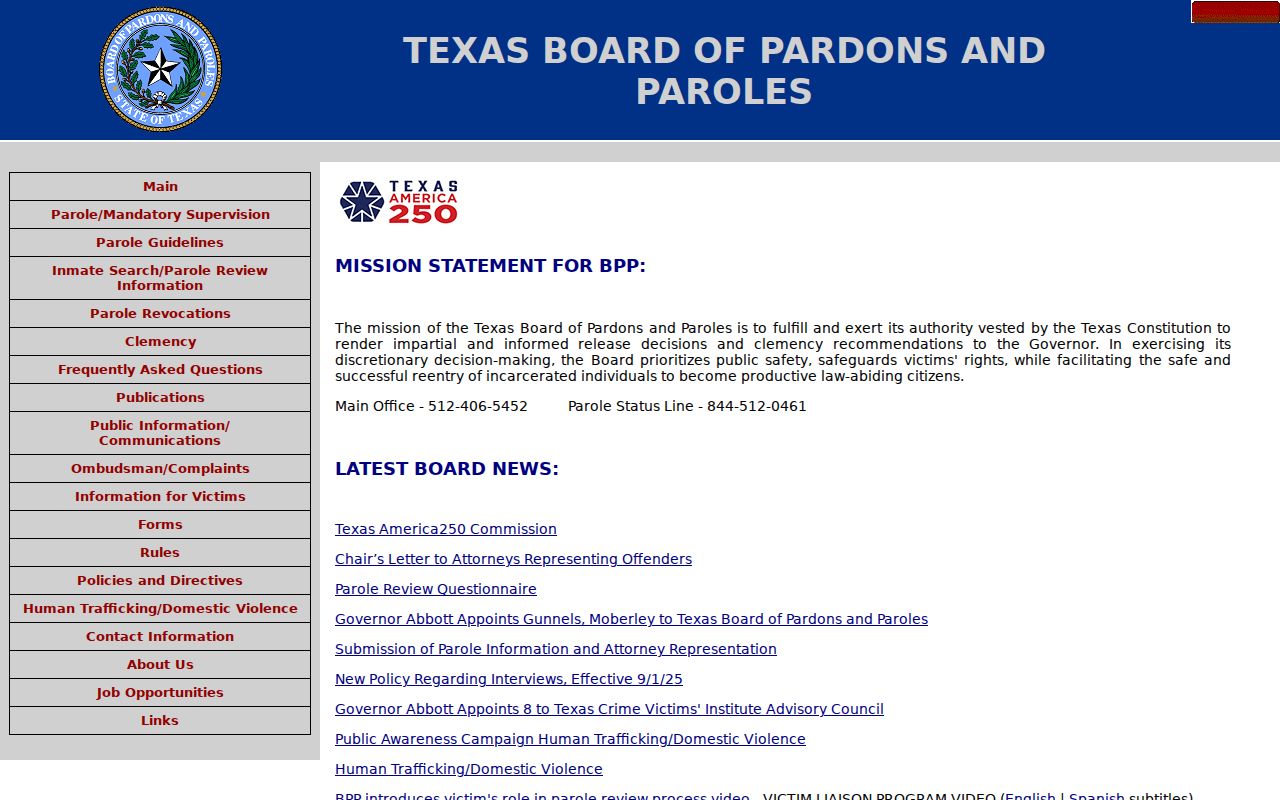
Parole status and sex offender registration are separate legal subjects, so a board page must not be read as a substitute for the DPS registry.
The TDCJ Parole Division page documents the state office that supervises releasees.
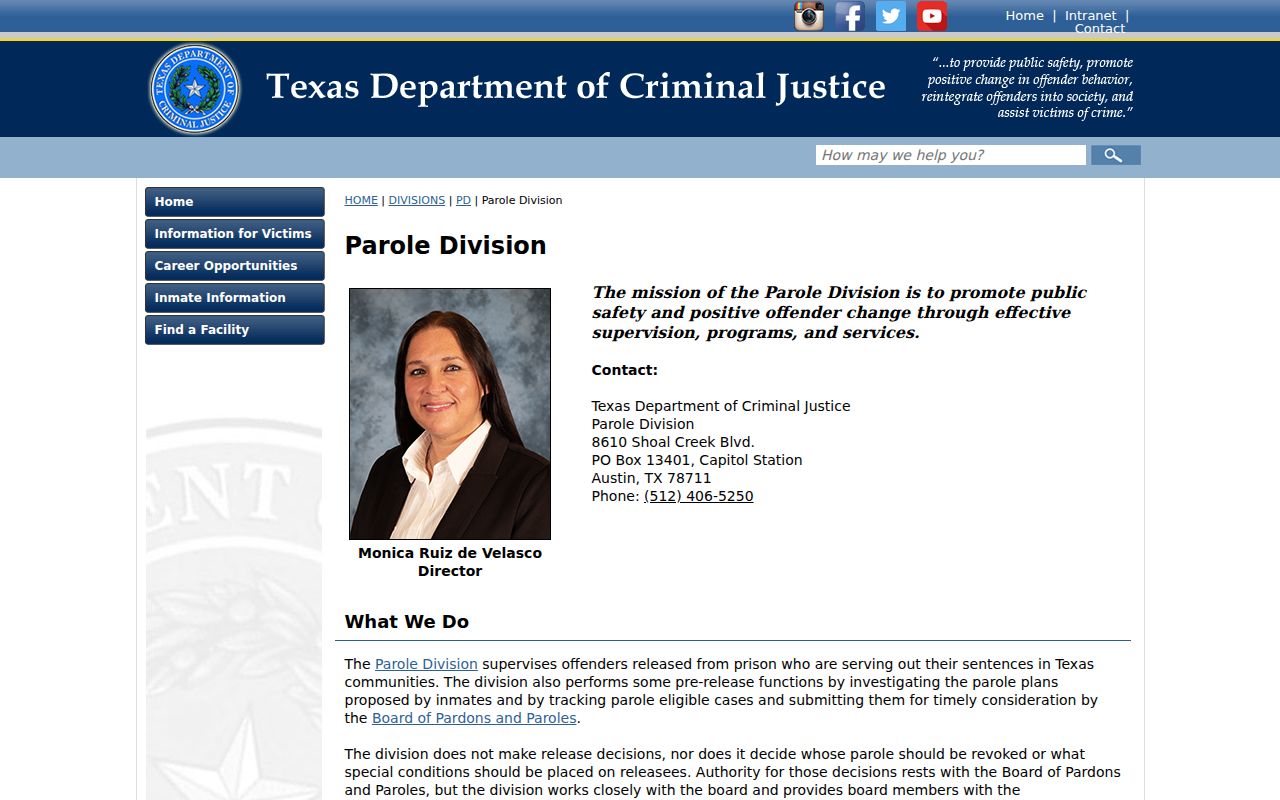
Supervision conditions can affect an individual case, but they do not create a county-wide registry level or a general Carson County distance rule.
Carson County Registry and NSOPW
The Texas DPS registry is the primary source for Carson County entries. The National Sex Offender Public Website, maintained as a U.S. Department of Justice search across participating jurisdictions, adds a cross-state layer. It is useful when the person or address may connect to another state. It should supplement, not displace, the Texas search for a Carson County question.
Run DPS first for Texas fields and local filters. Use NSOPW next when a search spans jurisdictions or a move across a state line may matter. Compare identity details and source jurisdictions before deciding two results refer to the same person. Neither search is a general criminal-history report.
The official NSOPW search landing page shows the national entry point without exposing an individual profile.
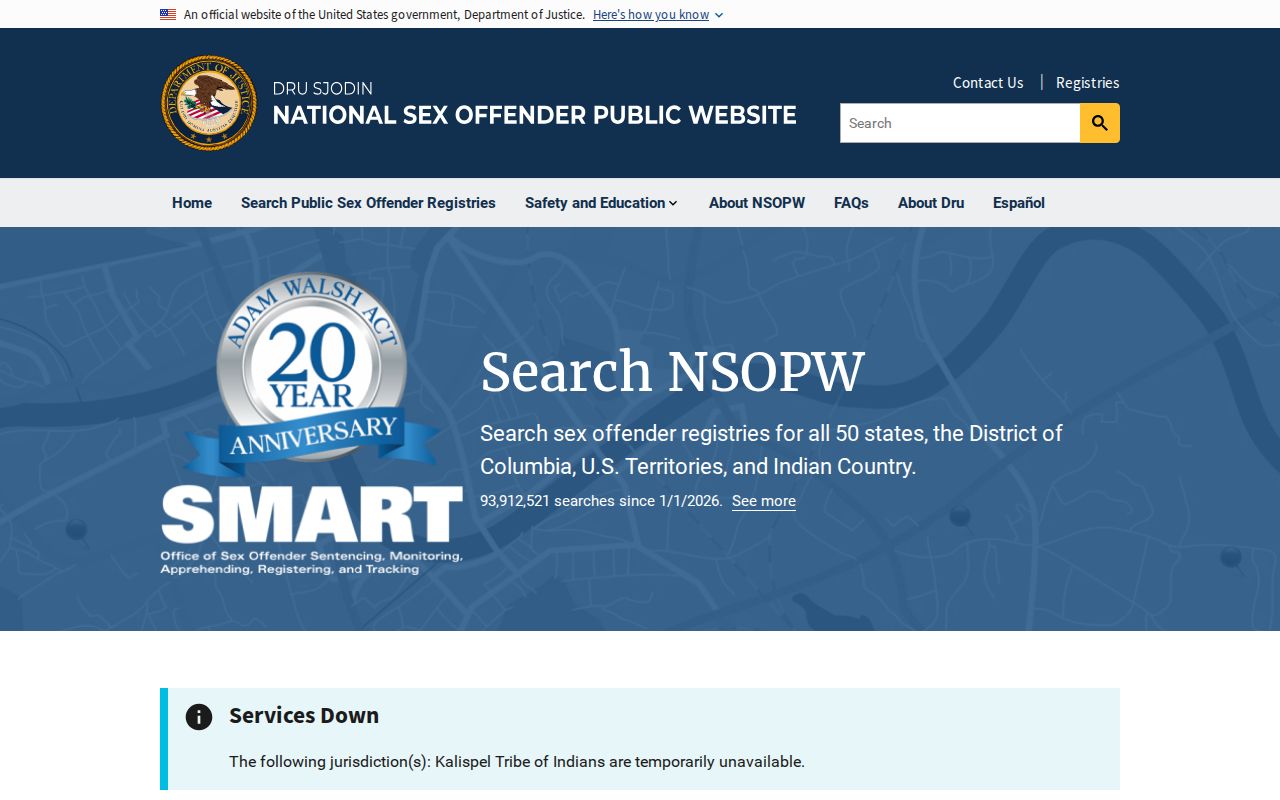
This national layer is most useful after the Texas search when a Carson County inquiry may cross a jurisdiction line.
Carson County Residency Rule Limits
No verified Carson County ordinance establishing a county-wide residence-distance rule was found in the official sources. Do not invent a fixed number of feet from a school, park, or child-care site. Residence limits may arise from state law, a city rule, or an individual supervision condition, and those are not interchangeable.
For a county rule, ask the Carson County Sheriff which current authority applies. For a location inside an incorporated city, confirm whether that city has adopted a separate ordinance. A condition in one person’s judgment, parole terms, or community-supervision order does not automatically apply to every registrant. The public registry map also shows location data; it does not itself declare that an address complies with every possible land-use or supervision condition.
Note: An official registry address is a public data point, not permission to visit, photograph, monitor, or confront anyone at that location.
Lawful Use and Community Notification
Chapter 62 publication and community notification support awareness and safety planning. A reader can check an address, understand what DPS publicly reports, and pass a good-faith compliance concern to the proper authority. Publication is not an invitation to punish, shame, follow, or contact a person. The Carson County Sheriff and DPS are the official channels for action on registration information.
Chapter 62 misuse warning: Misusing Texas registry information to harass, threaten, intimidate, or commit an offense is a crime. Public access does not authorize vigilantism or contact with a registrant or household.
When a public profile creates an immediate safety concern, contact law enforcement. When it appears stale or inconsistent, use the correction path through DPS and the local registration authority. Both responses keep the focus on verified facts and lawful community safety.